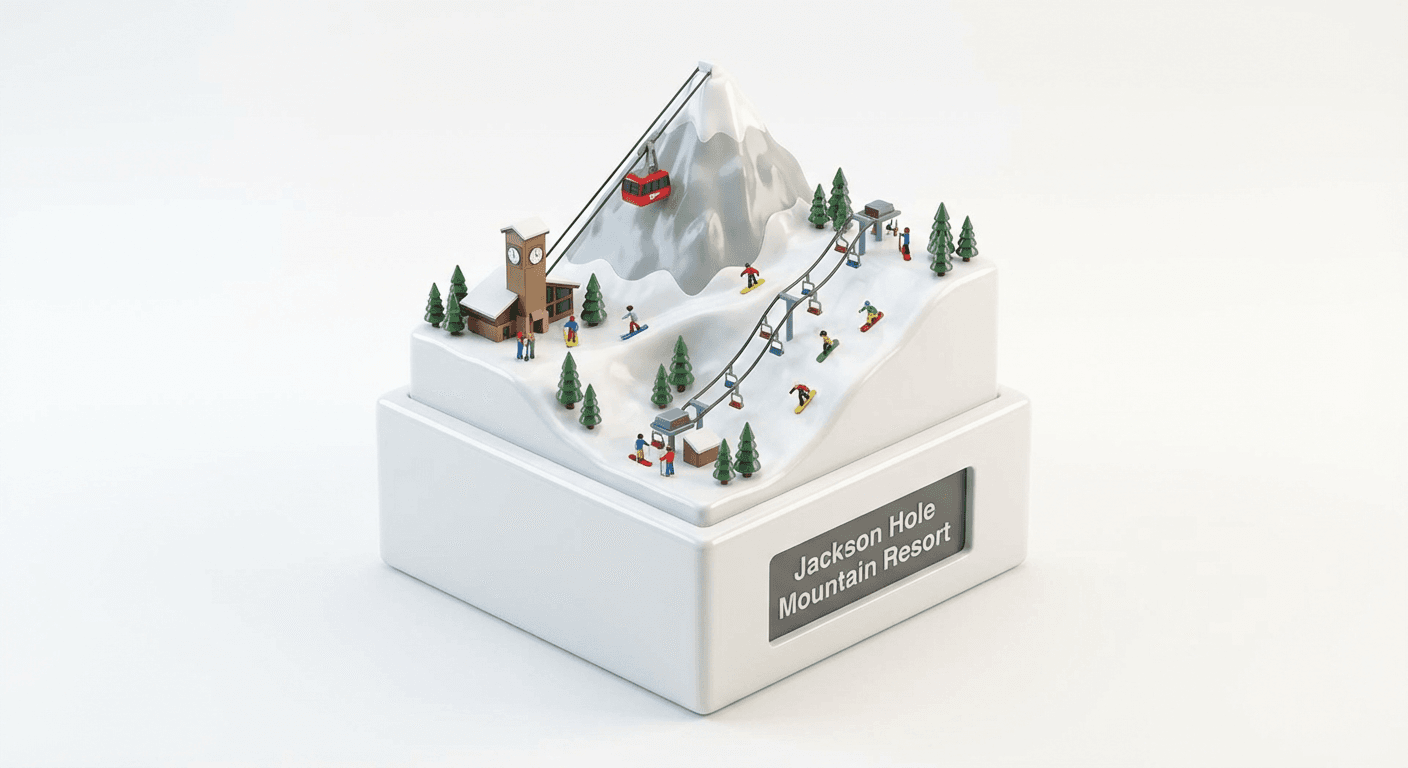
Jackson Hole Mountain Resort is famously steep, but beginners have dedicated zones to build confidence before venturing onto the mountain's more dramatic terrain. The primary beginner area is the base of Après Vous Mountain, where the Eagle's Rest and Teewinot lifts service a cluster of gentle, groomed runs perfectly suited for first-timers and those shaking off early-season rust. Runs like Elk, Fox, and Marmot offer wide, low-angle pitches where new skiers and snowboarders can practice turns without feeling overwhelmed by the surrounding steepness.
The resort's ski school operates heavily out of this zone, and the grooming crews keep these runs in excellent shape throughout the day. Green Circle terrain at Jackson Hole is genuinely gentle by the resort's overall standards, which means beginners won't accidentally find themselves on something terrifying if they stick to the marked learning zones. Après Vous also has its own dedicated gondola, making it easy to isolate your skiing to that side of the resort while you progress.
One important note for first-timers: Jackson Hole's vertical drop of 3,860 feet and overall terrain profile means the intermediate step-up is significant. Plan to spend a full day or two on beginner terrain before advancing, and consider a lesson to accelerate your progression. The reward for patient learning is access to one of the most spectacular ski mountains in North America.
Intermediate skiers are in for a treat at Jackson Hole, though it's worth understanding that the resort's blue runs often push the upper boundaries of what most resorts would call intermediate. Après Vous Mountain is the heartland of mid-level skiing, with runs like Sundowner, Moran Woods, and Westerner offering sustained cruising terrain with sweeping views of the Tetons. These runs reward rhythmic carved turns and give intermediates the chance to cover real vertical without constant pressure.
On the Tram side of the mountain, runs accessible from the Bridger Gondola and Thunder lift open up excellent intermediate terrain. Werner, Casper Bowl's gentler lines, and the traverse-accessible Amphitheater runs provide a taste of high-alpine skiing with manageable pitch. Laramie Bowl, accessed from the top of the Apres Vous lift, is a wide, open groomer that feels like a reward on a bluebird powder day.
Strong intermediates looking to stretch their skills should explore the groomed runs off the top of Rendezvous Mountain on good-weather days. Runs like Gros Ventre offer a serious vertical challenge that will have most intermediates grinning ear to ear. The key to a great intermediate experience at Jackson Hole is chasing freshly groomed corduroy in the morning and saving exploration for the afternoon once you've got your legs under you.
Jackson Hole is, at its core, an expert mountain, and the advanced and expert terrain here is world-class in every sense. The Aerial Tram, which hauls skiers and boarders to the 10,400-foot summit of Rendezvous Mountain, is the gateway to the most iconic lines on the hill. From the top, Corbet's Couloir commands immediate attention — a near-vertical entrance requiring a mandatory air drop into a narrow, cliff-flanked chute that has become one of skiing's most famous challenges and home to the Kings and Queens of Corbet's competition. It is not for the faint-hearted.
The Hobacks are the wide, open expert runs flowing off the southern flanks of Rendezvous and offer some of the best sustained steep skiing in the American West, particularly in deep powder conditions. Cheyenne Bowl, Rendezvous Bowl, and the Expert Chutes accessible from the tram top give advanced skiers virtually unlimited options on high-pitch terrain. The Thunder chair services a dense concentration of double-black runs including Expert Chutes 1 through 4, which funnel into tight, rocky lines that demand precise technique. Rock Springs Bowl, accessible with a short hike, opens up even more remote and challenging terrain.
For true experts, the 'Headwall' accessed from the tram and runs like the Upper and Lower Sublette Ridge chutes represent Jackson Hole at its most uncompromising. The resort's 50-percent expert terrain designation is genuinely honest — this is sustained, committing skiing that rewards experience and punishes hesitation. Always check avalanche forecasts and ski patrol bulletins before venturing into any of the more exposed zones, and never drop into closed terrain.
Jackson Hole is primarily celebrated for its natural terrain rather than sculpted park features, but the resort does maintain a terrain park for freestyle enthusiasts. The Marmot terrain park, located in the beginner-friendly lower mountain zone, offers a progression-friendly setup with jumps, rails, and boxes scaled for riders building their freestyle skills. It's a solid park for those learning tricks or warming up, though dedicated park riders accustomed to mega-parks at resorts like Park City or Mammoth should calibrate their expectations accordingly.
The resort tends to invest more energy in its natural features — the boulders, rollers, cliff bands, and natural hits scattered across the mountain are genuinely exceptional and offer freestyle-minded experts an endless supply of natural kickers and launch points. The Hobacks in particular are beloved by advanced riders looking for natural terrain features in open powder fields. If you're a park-focused rider, the park at Jackson Hole is a bonus, not a headline attraction — the real show is the mountain itself.
Tree skiing at Jackson Hole is exceptional, with numerous well-spaced glade zones that hold powder for days after a storm thanks to the high-alpine, dry Wyoming snowpack. The Moran Woods off Après Vous is the most accessible tree zone for intermediate-level skiers and boarders — the pitch is manageable and the trees are forgiving, making it a great introduction to off-piste skiing for those stepping out of the groomed world for the first time. After a significant snowfall, Moran Woods becomes a powder-hunting paradise within reach of blue-run skiers.
For advanced riders, the glades off Thunder and through Casper Bowl offer tight, technical tree skiing on steeper pitches. The trees throughout the upper mountain are interspersed with rock bands and require attentiveness and quick edge-to-edge movements. The glades accessible off the Bridger Gondola on skier's left hold cold smoke powder particularly well due to their aspect and tree canopy density, and locals often make a beeline for these zones on storm days.
One of Jackson Hole's defining characteristics is that glades and groomed runs coexist naturally — you can peel off a groomed boulevard into the trees and rejoin it lower down without a long traverse. This makes the resort ideal for riders who like to mix styles throughout the day. Always scout new glade zones with a local or guide on your first exploration, as some tree areas transition quickly into cliff bands or runouts with limited escape routes.
Jackson Hole offers some of the most dramatic sidecountry and backcountry access of any resort in North America, with the surrounding Bridger-Teton National Forest and the shadow of the Teton Range creating an extraordinary backdrop for lift-assisted backcountry skiing. The resort's boundary gates provide access to several well-known sidecountry zones, including the famous Teton Pass area nearby and the extensive terrain accessible through gates off the main mountain. Backcountry gates are opened and closed by ski patrol based on snowpack and avalanche conditions, so always verify gate status at the patrol shack or daily report before heading out.
The most popular sidecountry access point is through the gates off the top of the tram, dropping into areas like Rock Springs Bowl and beyond toward remote gullies and open faces with virtually no other skiers. The Headwall gate and Granite Canyon exit are used by experienced backcountry skiers to access extended tours. Note that once you leave resort boundaries, you are fully responsible for your own safety — carry an avalanche beacon, probe, and shovel at minimum, and ideally ski with a partner who has backcountry rescue training.
For those seeking a full backcountry experience, Jackson Hole serves as the hub for world-class touring throughout the Tetons. Local guide services offer guided backcountry days, splitboard tours, and heli-skiing operations in the surrounding ranges. The nearby town of Jackson is home to several excellent outdoor retailers who can outfit you with proper safety gear. Whether you're ducking a single gate for a few hundred meters of untracked snow or embarking on a multi-day Teton traverse, the backcountry landscape surrounding Jackson Hole is as serious and spectacular as mountain skiing gets anywhere in the world.
Jackson Hole doesn't apologize for being hard. From the moment you roll into Teton Village and look up at Rendez-Vous Mountain looming over everything like a dare, you understand that this place has a personality — and that personality is bold, rugged, and absolutely uncompromising. This is a mountain that has built its entire identity around difficulty, steep couloirs, and a kind of earned respect that you only get by actually skiing it.
That said, Jackson Hole isn't just a brutalist proving ground for experts. The base village hums with genuine energy — a mix of weathered locals in beat-up ski boots, wide-eyed first-timers who wandered in from a national park tour, and serious destination skiers who saved up all year for this trip. The aprés scene is lively without feeling like a college party, and the town of Jackson itself, just 12 miles away, offers world-class dining, art galleries, and a Western authenticity that most ski towns have long since traded away for condos and chain restaurants.
Let's be honest: Jackson Hole belongs to the intermediate-to-expert skier. With roughly 50% of its 134 runs rated black or double-black, and a vertical drop of 3,860 feet that ranks among the largest in the United States, this mountain rewards aggression and punishes hesitation. If you're a strong blue-run skier looking to push yourself, Jackson will stretch you in ways that feel thrilling rather than terrifying — but you need to be ready to commit.
True beginners and young families can find their footing on the lower mountain around Apres Vous, which offers gentler terrain and a slightly more forgiving atmosphere. But if you're skiing with a group where half the party tops out at groomed blues, prepare for some logistical creativity. Jackson Hole is best experienced by those who can point their skis down something steep and trust their edges.
Expert and advanced skiers, however, will feel like they've found religion. The combination of consistent snowfall — Jackson averages over 450 inches of snow per year — a 2,500-acre footprint, and terrain that ranges from wide open groomers to narrow chutes and cliff bands means that no matter how many times you visit, this mountain keeps revealing new challenges.
The numbers tell part of the story. Nearly 4,000 feet of vertical. Two interconnected mountains — Rendezvous and Apres Vous. The legendary Aerial Tram, one of the most iconic lifts in American skiing, hauling 100 people at a time to the 10,400-foot summit where the views of the Tetons stretch into Wyoming infinity. But the real magic of Jackson Hole is harder to quantify — it's the feeling that you're skiing somewhere that hasn't been softened or sanitized for mass appeal.
The inbounds terrain here is genuinely extreme in ways that most resorts can only simulate. Corbet's Couloir — perhaps the most famous named run in North America — demands a mandatory air entry into a narrow chute that makes your stomach drop just watching other people do it. The Hobacks offer wide, rolling powder fields that feel like backcountry skiing without leaving the resort boundary. And the resort's proximity to Grand Teton National Park means the scenery isn't just beautiful, it's otherworldly, the kind of backdrop that makes you stop mid-run and realize you're somewhere truly extraordinary.
Jackson Hole also benefits from a snow profile that skiers dream about: cold, dry, light powder that falls consistently throughout the season and preserves beautifully in the shadowed north-facing terrain. When it dumps at Jackson, it really dumps — and the culture here is one where locals call in sick and ski patrol radios crackle with excitement.
Every Jackson Hole regular has their secret stash, but a few deserve mention. The Crags, accessible from the Thunder lift, offer some of the best and least-trafficked expert terrain on the mountain — steep, technical, and consistently overlooked by visitors beelining for Corbet's. Dick's Ditch is a long, winding tree run that locals disappear into after a storm and re-emerge from grinning. And for those willing to hike, the sidecountry accessible through gates off the top of the Tram opens up a world of wilderness skiing that rivals anything you'd find at a dedicated backcountry operation.
For a more mellow hidden experience, the lower Apres Vous terrain on a powder day is criminally underrated — while everyone else is stacking up at the Tram, you can lap short, sweet powder fields with virtually no crowd.
Compared to similar destination resorts, Jackson Hole occupies a unique tier. Vail and Park City offer more groomed mileage and better beginner infrastructure, but they lack Jackson's raw intensity. Snowbird in Utah is perhaps the closest spiritual cousin — steep, serious, deeply committed to experts — but Jackson's scenery and Western character give it an edge in pure experience. Big Sky in Montana rivals it for vertical and acreage, and the two are worth comparing for serious skiers choosing between the northern Rockies and the Tetons. Jackson Hole wins on prestige, terrain variety, and that ineffable sense of place. It is, without question, one of the two or three most important ski resorts in America — and skiing it at least once should be on every serious skier's list.