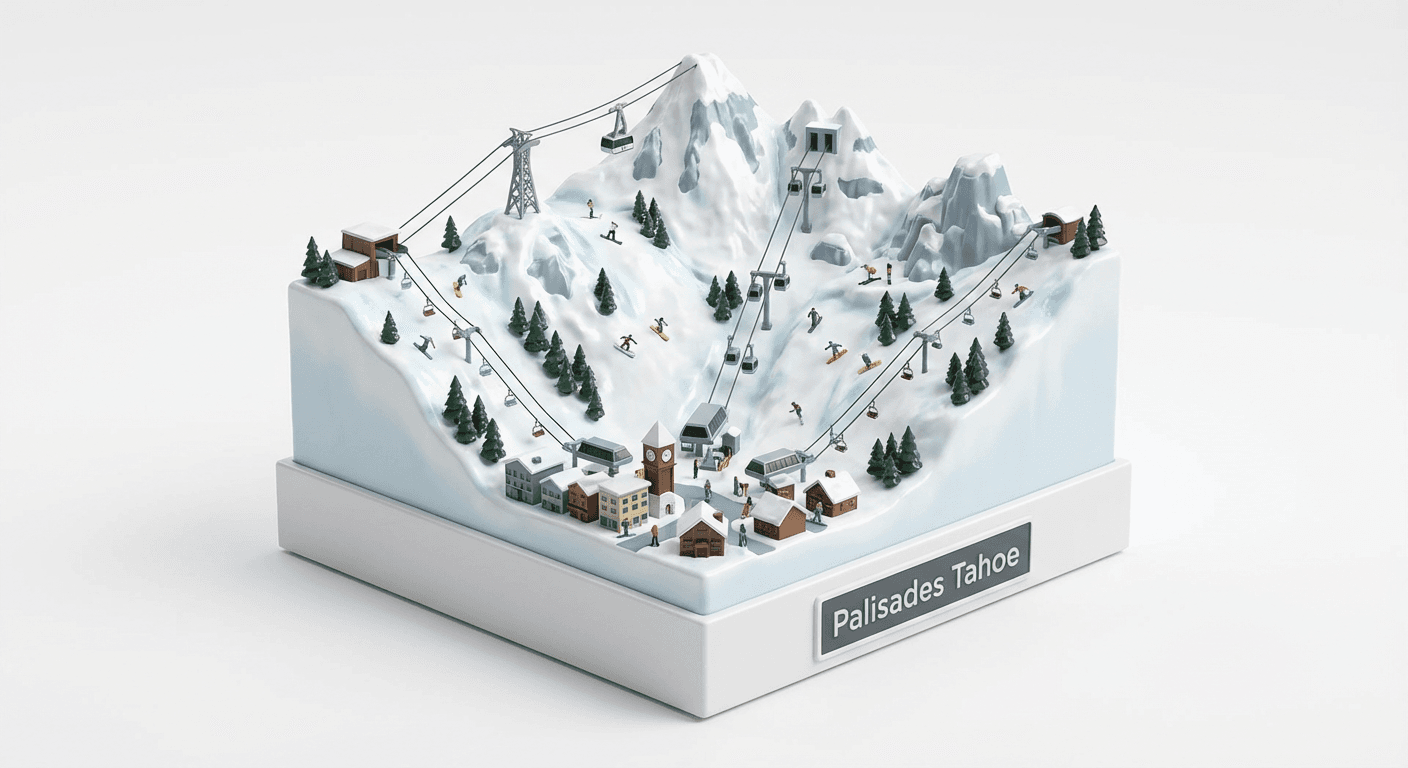
Palisades Tahoe is a resort best known for its challenging terrain, but it does offer dedicated beginner zones that give new skiers and snowboarders a solid foundation. The Gold Coast area at the top of the Funitel gondola at Alpine Meadows side provides gentle, wide-open groomed runs ideal for those just finding their ski legs. On the Palisades side, the area around the Riviera and Carpet Lifts near the base provides a protected, low-pressure environment where beginners can practice turns and stops without worrying about faster traffic.
The Exhibition run on the Palisades side is a longtime favorite for beginners and lower-level intermediates — it's a long, consistently graded green run that lets you feel the mountain beneath your feet while enjoying stunning views of Lake Tahoe. The Meadow and Packsaddle runs at Alpine Meadows are similarly accessible, winding through gentler terrain that builds confidence. First-timers should consider signing up for a lesson through the resort's ski school, which stages at both base areas and takes full advantage of these mellow zones.
One key tip for beginners: stick to the Palisades base area early in the day before the mountain gets crowded. The Carpet Lift and the Nick's Gully beginner area are often less trafficked in the morning. As you progress through the day, the Riviera Lift gives you access to slightly longer green terrain so you can start to feel what a full run actually looks like. Avoid the KT-22 and High Camp zones until you're firmly in the intermediate category — those areas drop steeply and can feel overwhelming for newer riders.
Intermediate skiers and snowboarders are in for a treat at Palisades Tahoe, which offers a fantastic spread of blue runs across both the Palisades and Alpine Meadows sides of the resort. On the Palisades side, the runs accessed via the Granite Chief lift — including Promised Land and Solitude — are classic Sierra intermediate cruisers with just enough pitch to keep things exciting. The Headwall and Papoose areas also offer excellent mid-mountain blues that reward skiers who like to carve wide, sweeping arcs on well-groomed surfaces.
At Alpine Meadows, the Roundhouse and Scott Chair lifts open up a wide array of intermediate terrain that tends to be less crowded than the Palisades base area on busy weekends. Runs like Weasel, Subway, and Sherwood are long, flowing blues that traverse open faces and gentle ridgelines, offering a mix of groomed corduroy in the morning and soft chop by the afternoon. The Sherwood area in particular is a hidden gem — accessed by a short traverse, it often holds snow longer and sees fewer skiers than the main mountain.
One of the best intermediate experiences at Palisades Tahoe is lapping the Mountain Run or Riviera Corridor from the top of High Camp, where the views of Lake Tahoe are simply jaw-dropping. These runs allow intermediates to link long descents with moderate pitch changes, building endurance and rhythm over the course of a full day. As you grow more confident, start poking into some of the easier blacks off the Siberia Express — runs like Siberia Bowl offer a perfect stepping stone toward more challenging terrain without throwing you off a cliff.
Palisades Tahoe has earned its legendary reputation among advanced and expert skiers largely because of KT-22, widely regarded as one of the best expert lifts in North America. The runs beneath KT-22 — including Nose, Fingers, Chute 75, and Red Dog — feature sustained steep pitches, rocky outcroppings, and variable snow conditions that demand technical skill and confidence. Chute 75 is a particularly iconic line, a narrow couloir that drops sharply and rewards those who can manage tight, controlled turns under pressure. This is the mountain that produced ski legends like Jonny Moseley and Shane McConkey, and you'll quickly understand why.
The Headwall Cliffs and the Palisades Face itself are the resort's crown jewels for big-mountain skiers. The Palisades is a series of cliff bands and steep faces accessed from the top of the Aerial Tram, where skiers can pick their own lines through a labyrinth of rocks and open chutes. Runs like Magnum Force, The Palisades, and Chimney require commitment — you'll be navigating convex rollovers, mandatory air in some places, and variable snow that might be windboard in the morning and heavy crud by afternoon. The Broken Arrow and Granite Chief area add another dimension of expert terrain with long fall-line pitches that test both fitness and technique.
On the Alpine Meadows side, the Summit Chair and the Estelle Bowl provide serious expert terrain that often holds powder longer due to its aspect and elevation. Ward Peak runs like High Yellow and Summit are steep, open faces that can be phenomenal on a powder day. The Beaver Bowl area on skier's left also hides some excellent advanced-only lines through rollovers and wind-sculpted terrain. Across both sides, the resort's 270 runs ensure that even the most well-traveled expert will find new lines to explore over multiple days — just be sure to pick up a trail map and talk to ski patrol about current conditions before venturing into the most committing zones.
Palisades Tahoe has a solid freestyle scene anchored by dedicated terrain parks that cater to a range of ability levels. The resort typically operates the Riviera Terrain Park on the Palisades side, which features a progressive setup of jumps, rails, and boxes suited to beginner and intermediate park riders. This park is a great spot to learn your first rail slide or work up to a 10-foot table-top jump in a forgiving environment with consistent grooming and park crew maintenance throughout the season.
For more experienced park riders, the resort builds larger jump lines and more technical jib features in dedicated advanced park zones that shift depending on the season's snowpack and trail conditions — check the resort's website or the snow report app for the most current park map before heading out. The halfpipe has historically been a feature at Palisades Tahoe during peak season, though its availability can vary year to year depending on water resources and snowmaking priorities. The resort's freestyle team puts considerable effort into shaping and maintaining features, and the parks tend to be well-constructed when conditions allow.
One unique aspect of freestyle at Palisades Tahoe is the natural terrain that mimics park features throughout the mountain. The cliff bands below KT-22, the booters on the side of Cornice 1, and the endless natural rollers off Granite Chief all serve as a sort of un-manicured terrain park for advanced riders who prefer natural hits to shaped jumps. Many of the resort's most memorable freestyle moments have happened outside the official park boundaries, which speaks to just how much natural amplitude the mountain provides.
Tree skiing at Palisades Tahoe is excellent and varied, spanning both the Palisades and Alpine Meadows sides of the resort. On the Palisades side, the trees between the Scott Peak and Granite Chief areas offer tight, technical glades that reward skiers comfortable in variable, ungroomed snow. The Siberia Bowl trees and the gladed zones adjacent to Red Dog are particularly popular after a storm cycle, as the lift-served terrain feeds directly into forested corridors that hold light, sheltered powder for hours after an open-face storm would have been tracked out.
Alpine Meadows arguably has the better tree skiing of the two mountains, with the Sherwood area and the terrain off the Summit Chair providing dense, well-spaced conifer glades that feel wilder and more remote than their lift-served access might suggest. The trees between the Scott Chair and the Lakeview run are a local favorite — not heavily advertised, but consistently holding snow and offering fun, rhythmic turns through old-growth forest. Intermediate-to-advanced skiers will find the tree density manageable, while experts will enjoy pushing deeper into the steeper, tighter glades further from the groomed trails.
For the best tree skiing experience at Palisades Tahoe, timing is everything. Arrive early on the day after a significant snowfall — ideally a mid-week storm — and focus first on the Alpine Meadows glades off Roundhouse and Scott before the crowds arrive. The Palisades tree zones tend to get tracked quickly given the resort's high visitation, so patience and an early start are your best tools. Always ski the trees with a partner, carry a charged phone, and be aware of your exit routes back to groomed terrain. Ski patrol does a thorough job of sweeping, but gladed terrain requires extra personal responsibility.
Palisades Tahoe has long been a gateway to serious backcountry and sidecountry terrain, and the resort is unusually permissive about allowing experienced skiers to venture beyond the boundary gates. The resort operates a number of marked sidecountry access points that connect lift-served terrain to unpatrolled zones — most notably the gates off the KT-22 summit ridge and the Headwall area, which drop into serious, uncontrolled terrain that funnels back toward the base. Skiers using these access points must understand that they are leaving the ski area's safety net behind: no patrol, no grooming, no guaranteed return route.
The Granite Chief Wilderness Area, which borders the Palisades side of the resort, is a popular backcountry destination for those willing to earn their turns after an initial lift-assisted drop-in. From the top of the Granite Chief lift or the Aerial Tram, experienced backcountry travelers can skin into the wilderness for access to remote bowls and ridgelines that see very little traffic even on busy weekends. The terrain here is committing — expect avalanche-prone slopes, variable snowpack, and long runouts — so this is strictly an activity for those with avalanche safety training, proper rescue gear, and ideally a certified guide or experienced local partner.
On the Alpine Meadows side, the Summit Chair provides the highest elevation access point and serves as a launching pad for skiers looking to traverse into the terrain above Sherwood and beyond the resort boundary toward Ward Creek drainage. The sidecountry off Alpine Meadows tends to be slightly more approachable than the Palisades backcountry gates, but it demands the same level of preparation and respect. Before attempting any out-of-bounds travel, check the Eastern Sierra Avalanche Center forecast, register your plans with a trusted contact, and verify gate conditions with ski patrol. Palisades Tahoe's sidecountry is spectacular — but it rewards preparation and punishes complacency.
Palisades Tahoe doesn't whisper its reputation — it announces it from the cliffs of KT-22 and the cornices of Granite Chief. This is a mountain with genuine swagger, and it's earned every bit of it. Twice an Olympic venue (1960 Winter Games), Palisades carries that world-class DNA in its bones while somehow still feeling like a locals' mountain at its core. The base village buzzes with energy without tipping into theme-park territory, and the crowd skews toward people who actually came to ski hard rather than be seen doing it.
The merger with neighboring Alpine Meadows — now operating as a single resort under the Palisades Tahoe banner — has created something genuinely special: two distinct mountain personalities connected by a single lift pass. Palisades is the bold, aggressive showoff; Alpine is the quiet, technically interesting older sibling. Together they offer one of the most compelling ski experiences in North America.
If you're an advanced or expert skier who hasn't yet stood atop KT-22 and stared down its relentless fall line, you have unfinished business in this sport. Palisades was practically invented for skiers who want to be tested, humbled, and exhilarated in equal measure. The mountain's 270 runs spread across 1,800 acres, but make no mistake — the terrain distribution leans meaningfully toward the challenging end of the spectrum. Intermediates will find plenty to love on the groomed boulevards off Headwall and Shirley Lake, but they should know they're guests in an expert's house.
Families with strong young skiers will thrive here, especially those who've graduated beyond beginner mountains and want to take their first real steps into challenging Western terrain. The Alpine Meadows side offers a more forgiving, less intimidating environment for progressing riders. However, if you're a true beginner or nervous intermediate looking for a confidence-building vacation, you might find Palisades' personality a bit overwhelming — there are gentler introductions to Sierra skiing.
The mountain's variety is staggering and almost contradictory. One moment you're dropping into the steep, mogul-choked chutes off the Granite Chief lift, and the next you're floating through open glades with views of Lake Tahoe shimmering impossibly blue below you. The summit elevation of 8,940 feet is modest by Colorado standards, but the terrain it produces punches well above its weight. The 2,090 vertical feet delivers sustained pitch that keeps your legs honest all the way to the base.
What truly separates Palisades is KT-22 — a single lift that may have more concentrated expert terrain beneath it than any equivalent chair in the country. Sixteen hundred vertical feet of nearly unrelenting steepness, cliffs, chutes, and technical lines that have shaped generations of professional skiers. This is where careers are made and legends are born. On a powder day, the lineup at KT-22 is a pilgrimage, a ritual, and a community event all at once.
Most visitors beeline for KT-22 and miss some of Palisades' quieter brilliance. The Shirley Lake area, accessed via the Granite Chief lift, offers gorgeous tree skiing through old-growth forest with far lighter traffic than the main mountain. After a storm, duck into the trees skier's left of Granite Chief before the crowds find them — you'll find sheltered powder stashes that hold snow for days. The High Camp area also rewards explorers willing to traverse a bit; the views alone are worth the effort, and the runs back toward the Tram base often ski fast and uncrowded well into the afternoon.
On the Alpine Meadows side, the Scott Chair opens up terrain that feels like a completely different resort — quieter, more technical, and beloved by in-the-know locals. The Keyhole run and the terrain off the Lakeview chair offer a more meditative ski experience compared to the adrenaline circus next door. For the full Palisades experience, arrive early, ski the main mountain hard in the morning when it's freshest, cross over to Alpine after lunch when the crowds thin, and end your day on those quieter blue cruisers as the shadows lengthen over the Sierra Nevada. Few ski days anywhere will leave you feeling more satisfied.
Within the Tahoe basin, Palisades sits clearly at the top tier alongside Heavenly for sheer scale and ambition, but the two mountains have opposite personalities. Heavenly sells the view and the scene; Palisades sells the skiing. Against the broader California ski world, Palisades has no real rival — it's simply in a class of its own in the state. Measured against Colorado giants like Vail or Aspen, Palisades holds up remarkably well on terrain quality and challenge, while offering something those resorts can't match: the proximity of Lake Tahoe and that ineffable, salt-tinged Sierra Nevada light that makes every run feel slightly cinematic.
If you've skied Jackson Hole and craved something with a similar expert-forward ethos but warmer temperatures and a less brutal wind chill, Palisades is your answer. It doesn't have Jackson's raw vertical or its mythological status, but it matches it nearly blow for blow on technical variety and overall ski culture. Palisades Tahoe isn't just a great California ski resort — it's one of the genuinely great ski resorts in the world, and it knows it.